
Google's Universal Commerce Protocol: What It Means for AI Shopping

Steve Oak (Okkar Kyaw)
TLDR
Google launched the Universal Commerce Protocol (UCP) on January 11, 2026, enabling AI agents to handle complete shopping journeys from discovery to checkout. Co-developed with Shopify, Walmart, Target, Etsy, and Wayfair, UCP saw 122% sales lift in early tests. But with only 24% of consumers trusting AI to make purchases, Google is betting billions on closing a massive trust gap.
Prefer Video Experience? Watch below 👇
Prefer Audio Experience? Listen below 👇
Google doesn't want you to shop anymore. They want your AI to do it for you.
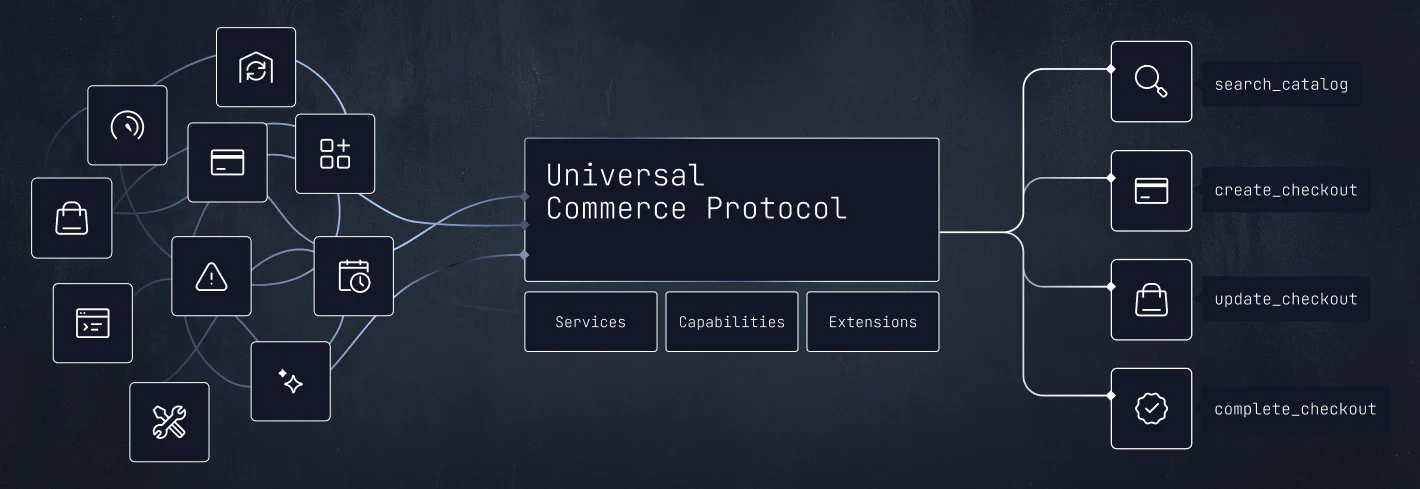
The Universal Commerce Protocol is essentially a universal translator for AI shopping. Imagine telling your phone "Find me a carry-on bag under $200" and instead of just searching, the AI compares prices, checks reviews, and can actually buy it for you. No clicking through websites. No checkout forms. The AI handles everything.
Key insight: UCP is the first open standard that unifies discovery, cart management, checkout, order fulfillment, and post-purchase support across diverse AI platforms and retail backends.
UCP powers native checkout in Google's AI Mode within Search and the Gemini app, starting with Google Pay. Retailers stay in control as the seller of record, meaning they maintain the customer relationship even when AI handles the transaction.
Why Should You Care About UCP?
The numbers tell a compelling story. Early pilot integrations reported a 122% lift in completed transactions for participating merchants, attributed to reduced friction in discovery-to-checkout flows.
Metric | Data | Source |
|---|---|---|
Consumer trust in AI purchases | 24% | Forrester (March 2025) |
Sales increase in pilot tests | 122% | AInvest/NRF data |
US agentic commerce by 2030 | $190-385 billion | Morgan Stanley |
Global orchestrated retail by 2030 | Up to $1 trillion | McKinsey |
Want control over final decision | 60% | BCG/LinkedIn |
But here's the tension. According to Forrester, only 24% of U.S. online adults trust AI agents to make purchases on their behalf. Google is betting that convenience, security, and standardization will eventually overcome that skepticism.
The data also shows context matters. Consumers are more willing to delegate routine purchases like groceries than high-value items. The trust threshold varies dramatically based on what's being bought and how much control users retain.
Who's Participating in UCP (And Who's Not)?
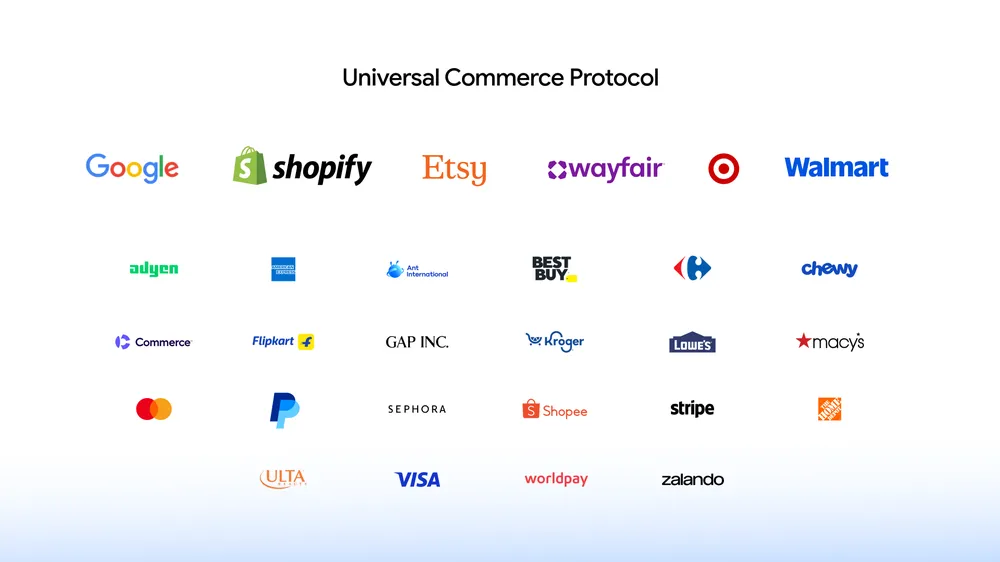
Google didn't build this alone. They co-developed UCP with major retailers and payment processors, forming a core working group for the open standard's design.
Co-Development Partners
Shopify
Walmart
Target
Etsy
Wayfair
Payment Processors
Mastercard
Visa
Adyen
Stripe
American Express
Google Pay
PayPal (announced, rolling out shortly)
Notable Absences
Amazon is not on the partner list. Despite being a leading e-commerce platform, Amazon favors proprietary, closed-loop integrations to maintain control over customer data and transaction flows. They recently launched their own agentic feature called 'Shop Direct' instead of joining UCP.
Apple is also absent, likely due to its focus on in-house payment solutions (Apple Pay, App Store ecosystem) and preference for walled-garden approaches. Apple has not issued any public statement regarding UCP participation.
This sets up a potential protocol war, similar to the early internet days when different standards competed for dominance.
What About Privacy and Data?
Not everyone is celebrating. Privacy advocates have raised significant concerns about UCP's implications.
Digital Rights Watch warns that UCP's framework, while security-focused, could centralize transaction data within Big Tech infrastructures, potentially enabling surveillance of purchasing habits unless robust decentralized privacy controls are mandated.
The Electronic Frontier Foundation has called for explicit, auditable consent protocols and on-device data handling guarantees within UCP to prevent unauthorized profiling and cross-service data sharing by AI platforms.
Privacy concern: When one company can see what you search for, what you browse, and what you buy, the data aggregation creates unprecedented visibility into consumer behavior.
Google emphasizes that UCP is an open standard and retailers remain the seller of record. But the infrastructure still flows through Google's systems, and that concentration raises legitimate questions about data governance.

Should Small Businesses Adopt UCP?
The answer depends on resources and risk tolerance.
According to a December 2025 survey by the National Federation of Independent Business, 38% of small retailers express skepticism about AI-driven commerce standards. Their concerns center on loss of direct customer relationships and potential revenue share pressures from platform owners.
Implementation Costs
Small merchants report anticipated onboarding and integration costs averaging $15,000 to $25,000 for UCP compliance. This includes:
Developer resources
API modernization
Staff training
Compliance verification
With uncertainty over ROI timelines, many small businesses are taking a wait-and-see approach.
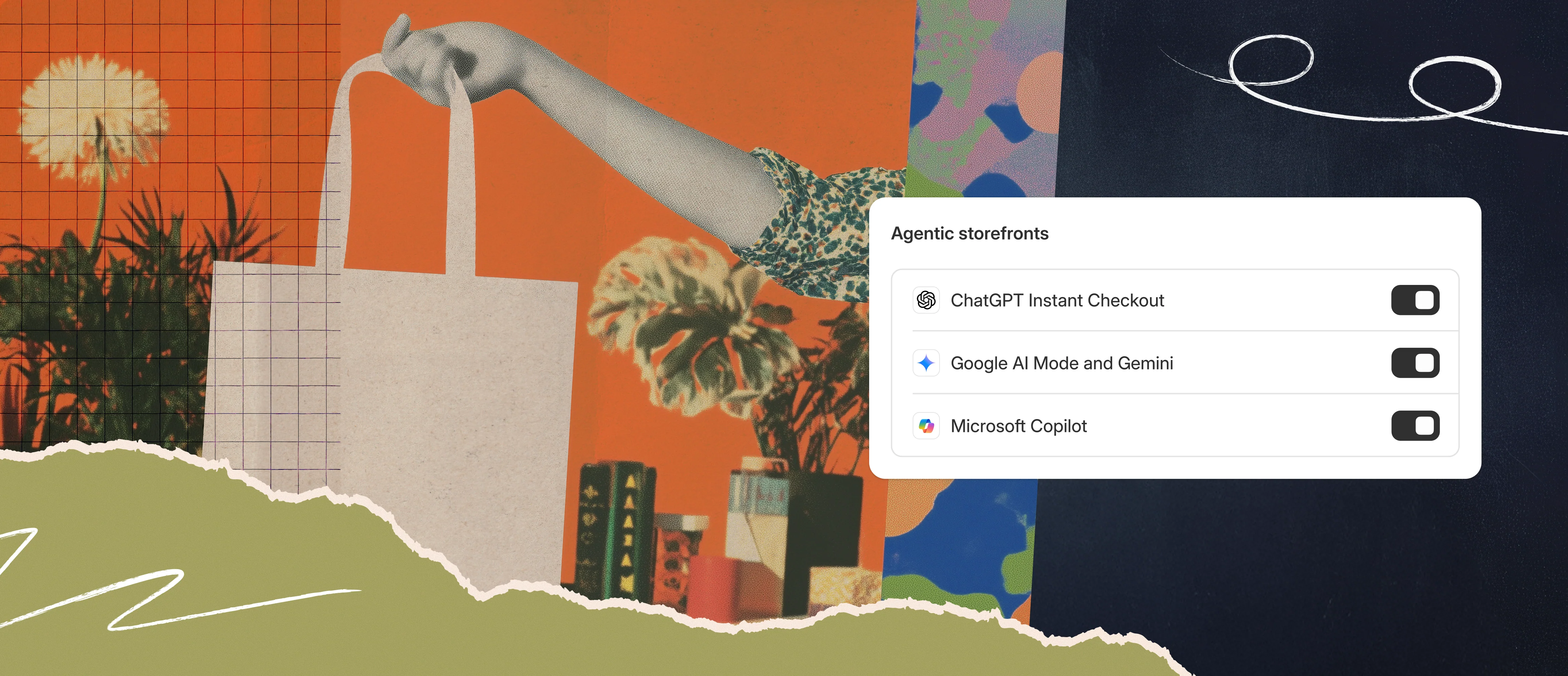
On the flip side, UCP could be a lifeline for small businesses that struggle to compete with major retailers in AI-driven discovery. A small boutique could suddenly be discoverable through Google's AI Mode and Gemini, appearing alongside major retailers in AI recommendations.
How Does UCP Compare to Other Protocols?
UCP enters a crowded landscape of emerging agentic commerce standards.
Protocol | Owner | Focus | Limitations |
|---|---|---|---|
UCP | Google + partners | Full journey: discovery to fulfillment | New, adoption uncertain |
MCP | Anthropic | Context exchange between AI models | Limited payment primitives |
A2A | Open standard | Peer-to-peer agent communication | No unified commerce lifecycle |
ACP | OpenAI/Stripe | Checkout and payment flows | Closed-source components, narrow ecosystem |
Compared to MCP, A2A, and ACP, UCP offers a full-journey, open-source standard that unifies the entire commerce lifecycle. This extensibility and broad ecosystem governance could make it the default standard, but only if adoption reaches critical mass.
What to Watch Next
Several dynamics will shape how UCP evolves:
Consumer adoption: Will people actually let AI buy things for them? The 24% trust number needs to climb significantly.
Amazon's response: If Amazon's 'Shop Direct' gains traction, merchants may face a choice about which ecosystem to prioritize.
Regulatory attention: Given ongoing antitrust scrutiny of Google, regulators may examine UCP's market implications.
Small business support: Subsidies and code libraries could lower the $15-25K implementation barrier.
Privacy safeguards: EFF and Digital Rights Watch recommendations could shape future versions.
Frequently Asked Questions
What is Google's Universal Commerce Protocol?
UCP is an open standard launched January 11, 2026 that lets AI agents handle complete shopping experiences, from finding products to checkout to post-purchase support. It was co-developed with Shopify, Walmart, Target, Etsy, and Wayfair.
Will AI buy things without my permission?
No. Current implementations require user approval for purchases. According to BCG research, 60% of consumers want control over final buying decisions, and UCP is designed to accommodate consent-based transactions.
Why isn't Amazon participating in UCP?
Amazon favors proprietary integrations to maintain control over customer data. They're building their own agentic feature called 'Shop Direct' instead of joining Google's consortium.
Is my data safe with UCP?
UCP emphasizes security and keeps retailers as the seller of record. However, privacy advocates like Digital Rights Watch and EFF have called for stronger decentralized controls and auditable consent protocols.
How much does UCP integration cost for small businesses?
Small merchants report anticipated costs of $15,000 to $25,000 for UCP compliance, including developer resources, API modernization, and training.
" height="27.75px" id="uLviGCnmH" width="32.250290101110345px"/></svg>)
" height="30.750000122616527px" id="vGhZKbMSS" width="30.75px"/></svg>)
" height="30.750000122616527px" id="TPi0p5D9h" width="30.75px"/></svg>)
" height="30.750000122616527px" id="fXIphKa5h" width="30.75px"/></svg>)