Why Chatbots Are Dead in 2026 (And What Replaces Them)

Steve Oak (Okkar Kyaw)
TLDR
By 2026, text-in-text-out chatbots are obsolete. Users now expect AI that executes tasks, not describes them. The winners will be AI agents that take action and generative UI that builds custom interfaces on the fly.
Prefer Video Experience? Watch below 👇
Prefer Audio Experience? Listen below 👇
The Problem: AI Slop
I'm going to make a prediction that sounds insane: by 2026, chatbots are officially dead.
Not the technology itself. The experience. We're going to look back at 2024 and 2025, all that time we spent typing paragraphs into a box and waiting for walls of text, and realize how absolutely broken that was.
Because the future isn't AI that talks about doing things. The future is AI that actually does them.
AI slop talks about doing things. Real AI apps actually do them.
We've been calling apps with purple gradients and broken UI layouts "AI slop" all year. But here's a better definition: 99% of AI apps swear they're going to change your life with all their marketing about AI agents and AI technology. Then you open the app and get the same three little dots, followed by a wall of text. A paragraph describing what you already know.
It doesn't do anything. It's a chatbot cosplaying as a tool.
Why Most AI Apps Feel the Same
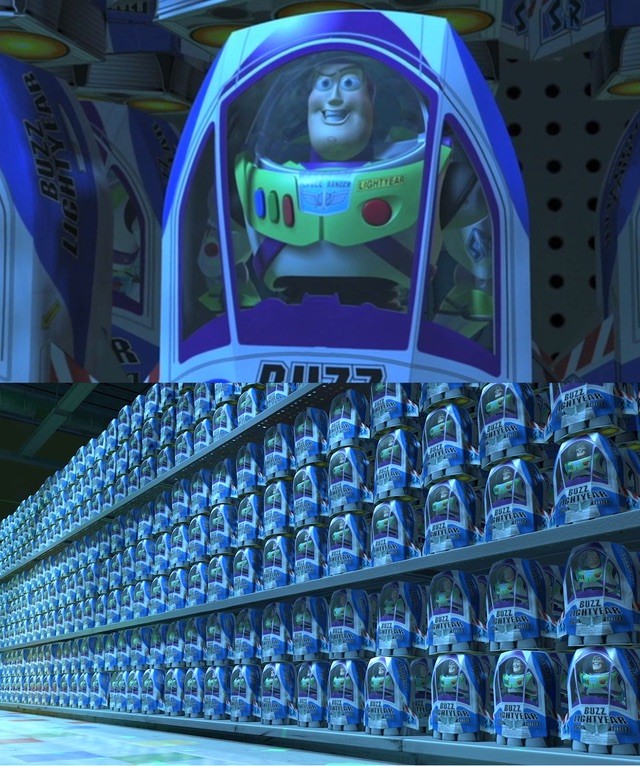
The reason most AI apps feel identical is that they all copy each other. We have a term for this: wrappers.
Apps whose entire "AI engine" is just a lazy prompt template hitting GPT or Gemini or Claude. No real workflow. No actual domain expertise. No ability to take useful action in your life.
50% of AI funding went to these wrapper companies. But we're in 2026 now. We can't just wrap AI models with some system prompts and call it a day.
Why Big Tech Is Struggling
Even the big companies are struggling. I love Perplexity's Comet Browser. But most of the time, when it controls pages, it takes forever to figure out what I can just click in seconds. It lags manual browsing by 30% in multi-step tasks. We're still in early phases.
And Apple Intelligence? Remember that WWDC hype about Siri doing things for you? Craig Federighi admitted the features were "not ready" and delayed them to 2026.
Problem | Impact |
|---|---|
Too much politics | Features stuck in approval |
Too many committees | Slow decision-making |
Risk aversion | Can't ship experimental features |
Even the companies that could build better are stuck. That's where indie developers and startups have the strength and adaptability to actually experiment.

What Actually Works
Here's what separates the apps that work from the slop.
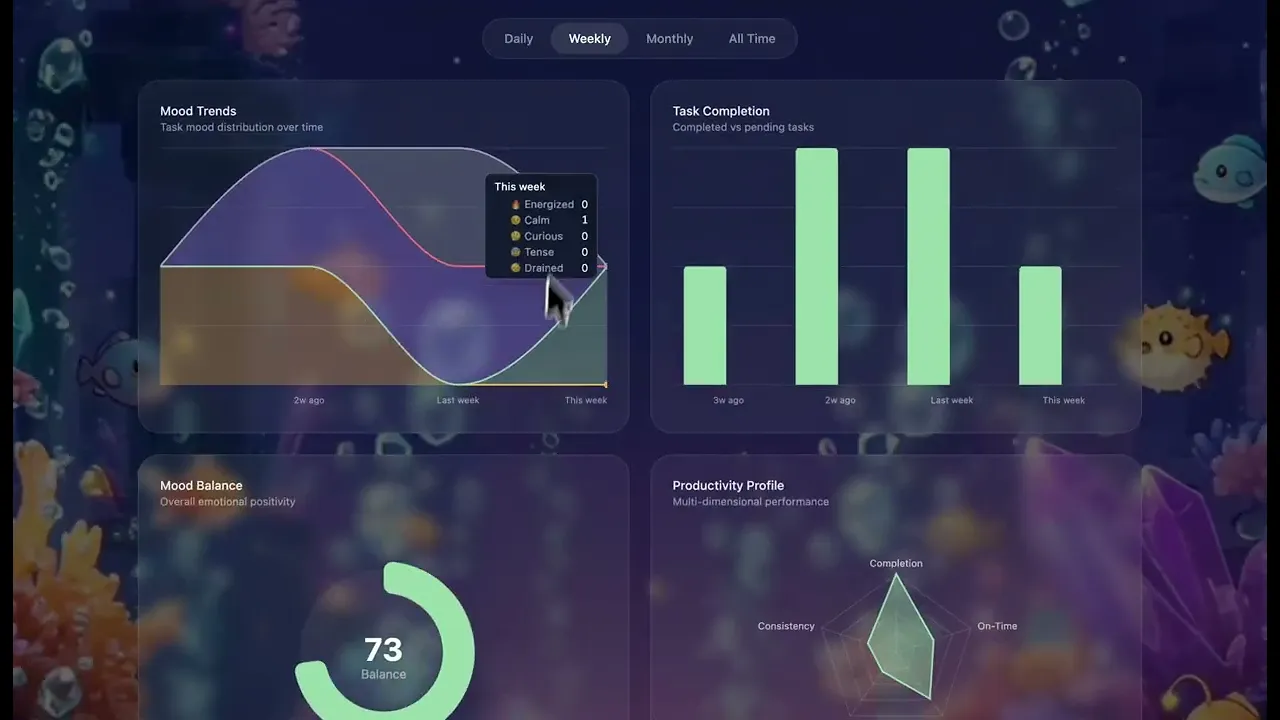
I typed one sentence into YouSoul: the MVP agent that I've been developing. The AI didn't give me a paragraph describing what I said. It created three actual tasks. And here's the key part: it scheduled them intelligently. Workout at 7am because exercise belongs in the morning. Blog post at 10am because deep work needs focus time.
The AI even understood the vibe of each task, adding mood indicators automatically. You talk to it like a human, and it takes action like an assistant.
This should be our new standard. Use "talk versus do" as a filter for every AI app you try.
The apps that work share three characteristics:
Pattern | Description |
|---|---|
Execute, not describe | Creates the event instead of describing it |
Infer context | Knows "morning" means 7am without asking |
Feel like experiences | Sound, motion, atmosphere, not gray forms |
The Future: Generative UI
Even the best action-based apps are still the bare-bones of what agents should be. The real endgame is generative UI.
Google just announced this with their Research Blog. The AI doesn't just respond with text. It builds an entire interface custom for your question. Interactive tools, simulations, experiences, all generated on the fly.
There's already movement in this direction:
GPT Stores offer some functionality
Vercel AI SDK provides generated UI components
Dedicated solutions like C1 Thesys are emerging
But right now they're way too expensive, charged on top of base AI models. We're not fully there yet. But this is the direction. If your favorite AI app isn't thinking about generative interfaces, they're already behind.
The Developer vs Consumer Gap
Here's what's actually wild about the current state of AI.
AI agents are incredible right now if you're a developer. Cursor, Claude Code, coding agents in general are legitimately shipping production code. But for everyone else using consumer apps? We're still in early phases.
Segment | Status | Accuracy |
|---|---|---|
Developer tools | Shipping | High |
Consumer apps | Early innings | ~60% |
The gap is real. By 2026, that gap closes violently. Or users stop tolerating it entirely.

Apps With Soul
Even when apps work, they're still boring. They're utilities. Click, type, submit, wait. The UI might look fine, but there's no response. There's no atmosphere.
Take a look at gaming. Games have vibes. Sound design, motion, atmosphere. Every interaction feels intentional.
Right now, with the power of AI, we can push much more on quality than on quantity. We can build apps that don't just function, they feel.
With YouSoul, I built it to help you feel calm for real. You've got a hundred tasks, but when you open the app, ambient sound plays softly. Every click has feedback. The experience matters as much as the functionality.
The 2026 Prediction
Here's the progression I'm watching:
2024: We were impressed computers could talk to us
2025: We realized talking isn't enough
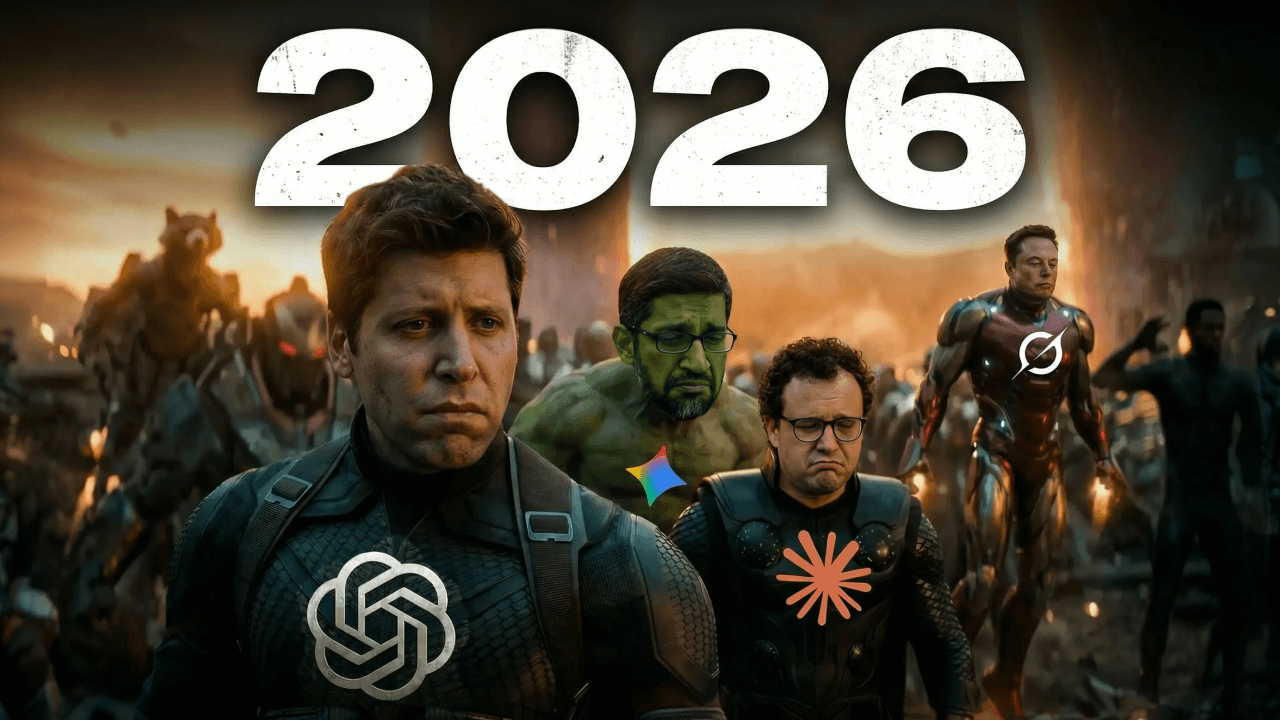
2026: If AI doesn't do things, it basically doesn't exist
Gartner predicts AI agent spend will hit $300 billion by 2026. Meanwhile, chatbot-only solutions are contracting 5% annually. Users won't tolerate chatbots anymore.
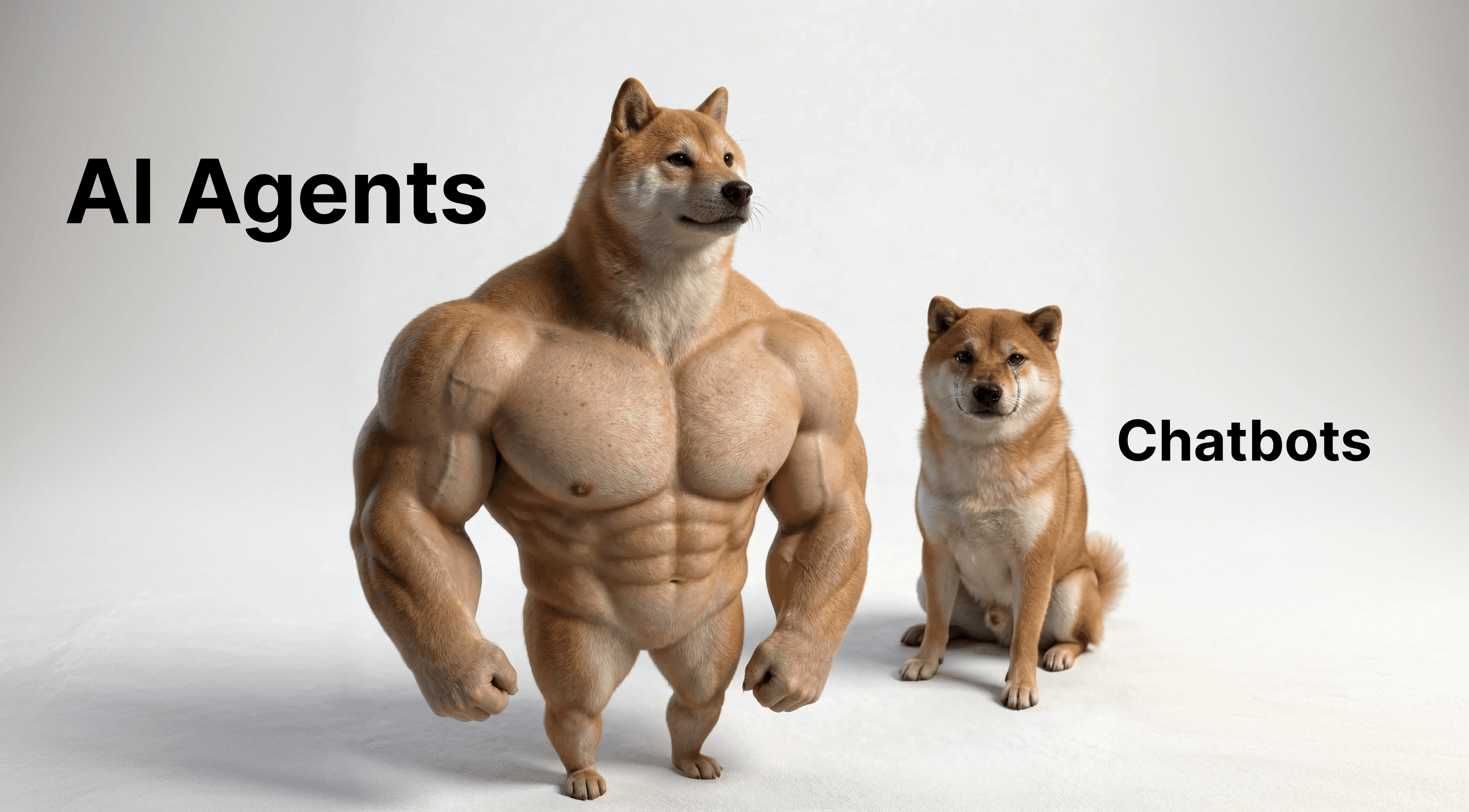
The winners won't be the chatboxes. The winners will be the agents that act and deliver. The apps that feel like experiences, not utilities. The tools that understand your life and actually participate in it.
A lot of big companies will get stuck in meetings. The indies? Shipping.
Conclusion
Stop settling for AI slop. Demand tools that work. And if you're building something, build something with soul.
Here's the mental model to evaluate any AI app:
Talk vs Do: Does it describe actions or take them?
Text vs Action: Does it return paragraphs or proof of execution?
Utility vs Experience: Does it feel like a form or an experience?
Frequently Asked Questions
Why are chatbots becoming obsolete?
Chatbots only describe actions instead of taking them. Users now expect AI that actually executes tasks like scheduling meetings, creating content, or managing workflows automatically.
What is generative UI?
Generative UI is AI that creates custom interfaces for each query instead of responding with text. Google's Gemini builds interactive forecasts, visualizations, and tools on the fly based on what you ask.
How can I tell if an AI app is real or slop?
Use the "Talk vs Do" test. Does the AI describe what it would do, or does it actually do it? If it returns text about actions, it's slop. If it returns proof of completed actions, it's an agent.
Why are indie developers winning over big companies?
Indie developers have agility. No committees, no approval processes, no politics. They can ship experimental features and iterate based on user feedback in days, not quarters.
What should I look for in AI productivity apps?
Look for apps that execute actions (not describe them), infer context without endless questions, and feel like calming experiences rather than addictive utilities.
" height="27.75px" id="uLviGCnmH" width="32.250290101110345px"/></svg>)
" height="30.750000122616527px" id="vGhZKbMSS" width="30.75px"/></svg>)
" height="30.750000122616527px" id="TPi0p5D9h" width="30.75px"/></svg>)
" height="30.750000122616527px" id="fXIphKa5h" width="30.75px"/></svg>)